Ger etiquette: how to be a good guest with a nomadic family
The customs of the Mongolian ger, explained simply: where to sit, how to accept tea, what never to do, and what to bring as a gift.
3 min read · Updated
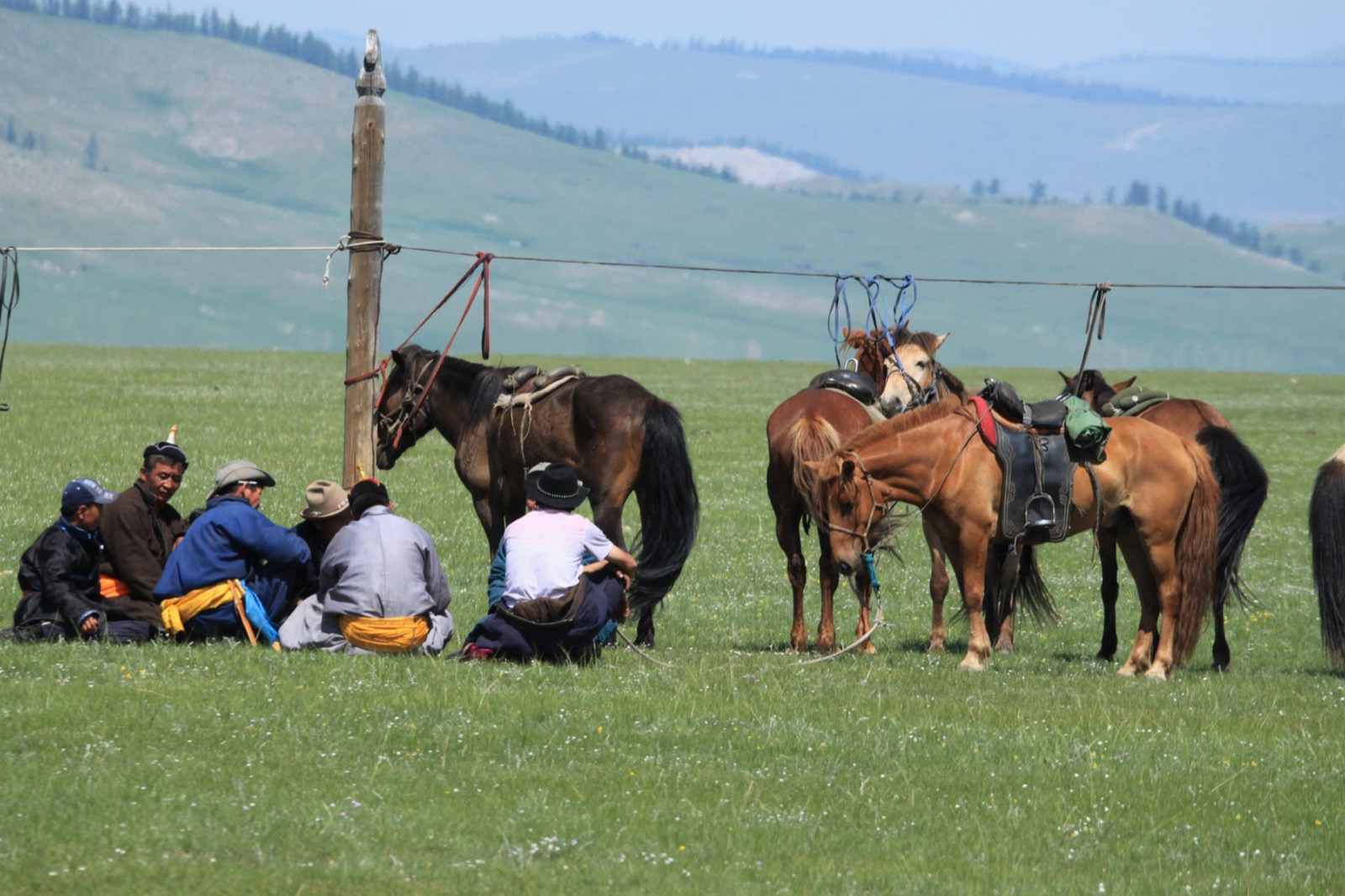
The ger (known as a yurt in Russian and many western languages) is the round felt tent that Mongolian herders have lived in for well over a thousand years. Around a third of Mongolians still live in one. A family can take it down in an hour and move it on a small truck or a few camels. Inside, everything has its place, and so do you.
Mongolians are famously forgiving of visitors who get the details wrong. Nobody expects you to know every rule. But knowing a few of them changes how you are received.
How a ger is laid out
- The door always faces south. This gives light, keeps out the north wind and tells the time: the patch of sun moving across the floor works as a clock.
- The stove stands in the centre, under the roof ring (toono), with two supporting posts beside it.
- The north side, opposite the door, is the place of honour (khoimor). The family altar, photographs and treasured things are kept there.
- The west side (left as you enter) is traditionally the men's and guests' side. Saddles and tools are kept there.
- The east side (right as you enter) is the women's side, with the kitchen things.
Coming in
- You do not need to knock. Call out as you approach. The traditional greeting from a distance is "Nokhoi khor!", which means "Hold the dog!", and it is practical advice. Herders' dogs guard the camp and should be treated with respect.
- Step over the threshold, never on it. Standing or treading on the threshold is considered an insult to the home.
- Move to the left (clockwise) as you enter, and sit where you are shown. Guests are usually seated on the west side or towards the back.
- Do not walk between the two central posts, and do not lean on them. They hold up the home, both physically and symbolically.
Tea and food
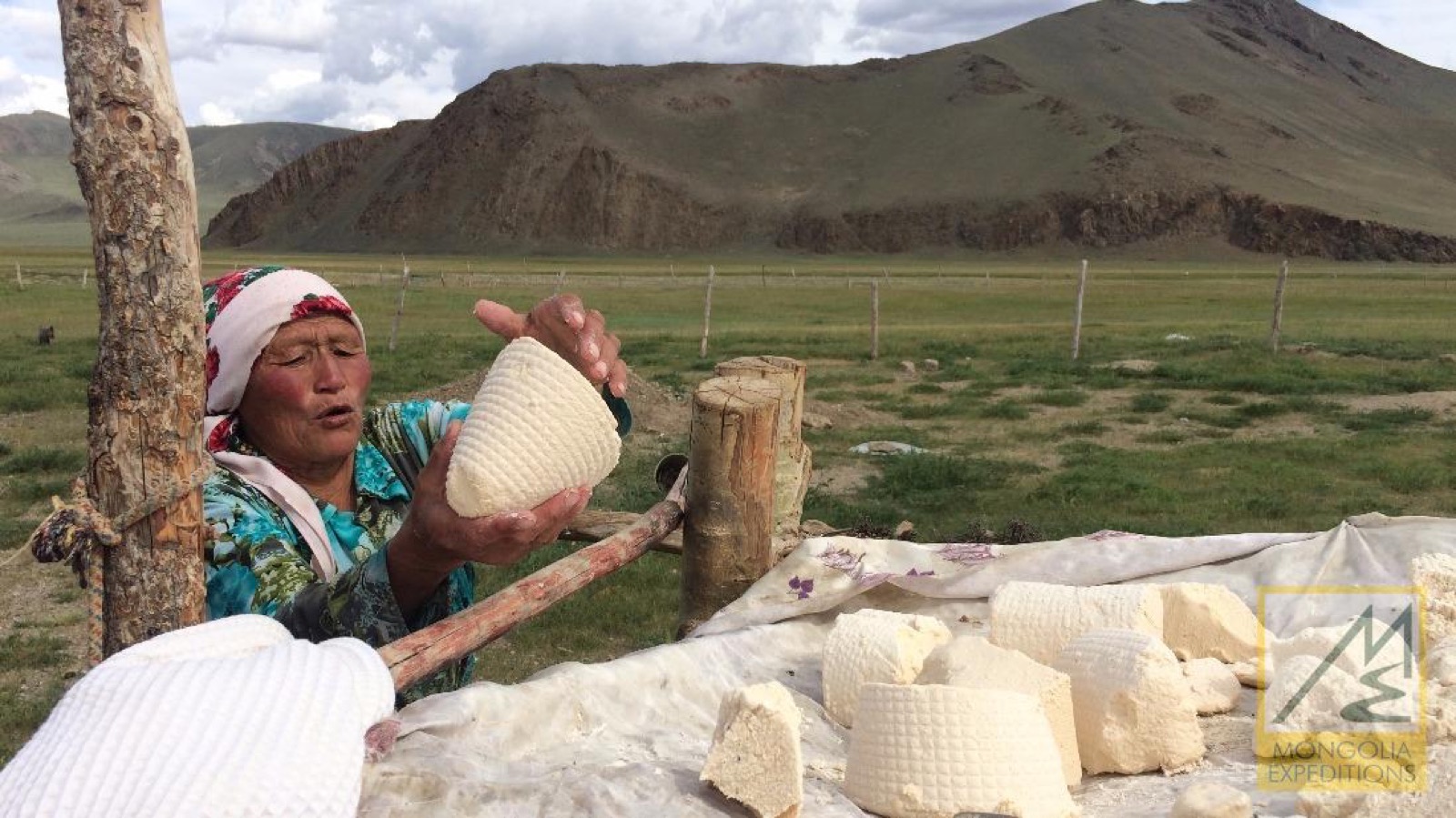
Within a minute or two you will be handed a bowl of suutei tsai, salty milk tea, followed by a plate of dried curd, bread or sweets.
- Receive with your right hand, or with both hands. A polite gesture is to support your right elbow with your left hand.
- Always accept. You do not have to finish everything. Taking a sip or a small bite is enough to honour the offer. Refusing outright is rude.
- Keep your sleeves rolled down when you accept something, if you are wearing long sleeves.
- If you are offered airag (fermented mare's milk) or vodka and do not want to drink, touch the bowl to your lips and hand it back with thanks. Nobody will be offended.
Things not to do
- Do not point your feet at the stove, the altar or another person when you sit.
- Do not throw rubbish or water into the fire. Fire is sacred.
- Do not step over a lasso pole (uurga) or a person's outstretched legs.
- Do not touch another person's hat, or put a hat on the floor.
- Do not whistle inside.
- If you accidentally touch someone's foot with yours, shake their hand straight away. It shows no offence was meant.
Gifts
A small gift for the family is always appreciated and should be something useful: tea, rice, flour, fruit, sweets or school supplies for the children. In summer, fresh fruit and vegetables are a treat in the countryside. Give with both hands. Money is fine when it is payment for a stay, and your guide will normally handle it.
Photographs
Ask first, especially before photographing the altar, elderly people or children. Most families say yes, and many will want to see the picture and receive a copy. A printed photo sent later is remembered for years.
Staying overnight
On a homestay you usually sleep in a guest ger beside the family's own, on a bed or a mattress on the floor. Expect:
- No bathroom. The toilet is a simple pit latrine a short walk away, or the open steppe. Washing is from a basin.
- Meat and dairy at every meal. See Mongolian food. Special diets need arranging well in advance.
- Early mornings. The day begins with milking, around five or six in summer.
- Real life. This is a working household. Joining in with milking, herding or collecting dung for the fire is welcome and is the best part of the visit.
A night with a herder family is, for most travellers, the memory that lasts longest. Many departures include one.