Mongolian history in brief, from the Xiongnu to today
A short history of Mongolia for travellers: steppe empires, Chinggis Khaan, Buddhism, the socialist century and the democracy of today.
3 min read · Updated
You do not need to know Mongolian history to enjoy the country, but a little of it explains a great deal of what you will see: why Chinggis Khaan's face is on the money, why monasteries lie in ruins, why the alphabet is Cyrillic, and why Mongolians are so proud of being independent.
Before the Mongols
The steppe has been home to nomadic herders for thousands of years. Bronze Age peoples left the deer stones and burial mounds found across central and northern Mongolia. In the 3rd century BC the Xiongnu built the first great steppe empire, strong enough that China's early dynasties built walls against it. They were followed by the Xianbei, the Rouran, and the Turkic and Uyghur khaganates, whose inscribed stone monuments still stand in the Orkhon Valley.
Chinggis Khaan and the empire
In 1162, by the traditional date, a boy named Temujin was born near the Onon river in what is now Khentii province. His father was poisoned, his family was abandoned, and he spent his youth in poverty and danger. Through alliances, war and unusual political skill he united the tribes of the steppe, and in 1206 was proclaimed Chinggis Khaan, ruler of all the Mongols.
He gave the new nation a written script, a code of law and an army organised by merit and not by tribe. By his death in 1227, that army had conquered from northern China to the Caspian Sea. His sons and grandsons carried on: under Ugudei, who founded the capital Karakorum in 1235, and later Khubilai, who conquered all of China and founded the Yuan dynasty, the Mongol Empire became the largest land empire in history.
The conquests were brutal. The empire also guarded trade routes, protected envoys and merchants, tolerated all religions and connected Europe and Asia as never before. Mongolians remember Chinggis Khaan above all as the founder of their nation. In English he is often spelled Genghis Khan. See eastern Mongolia and Khentii and central Mongolia.
After the empire
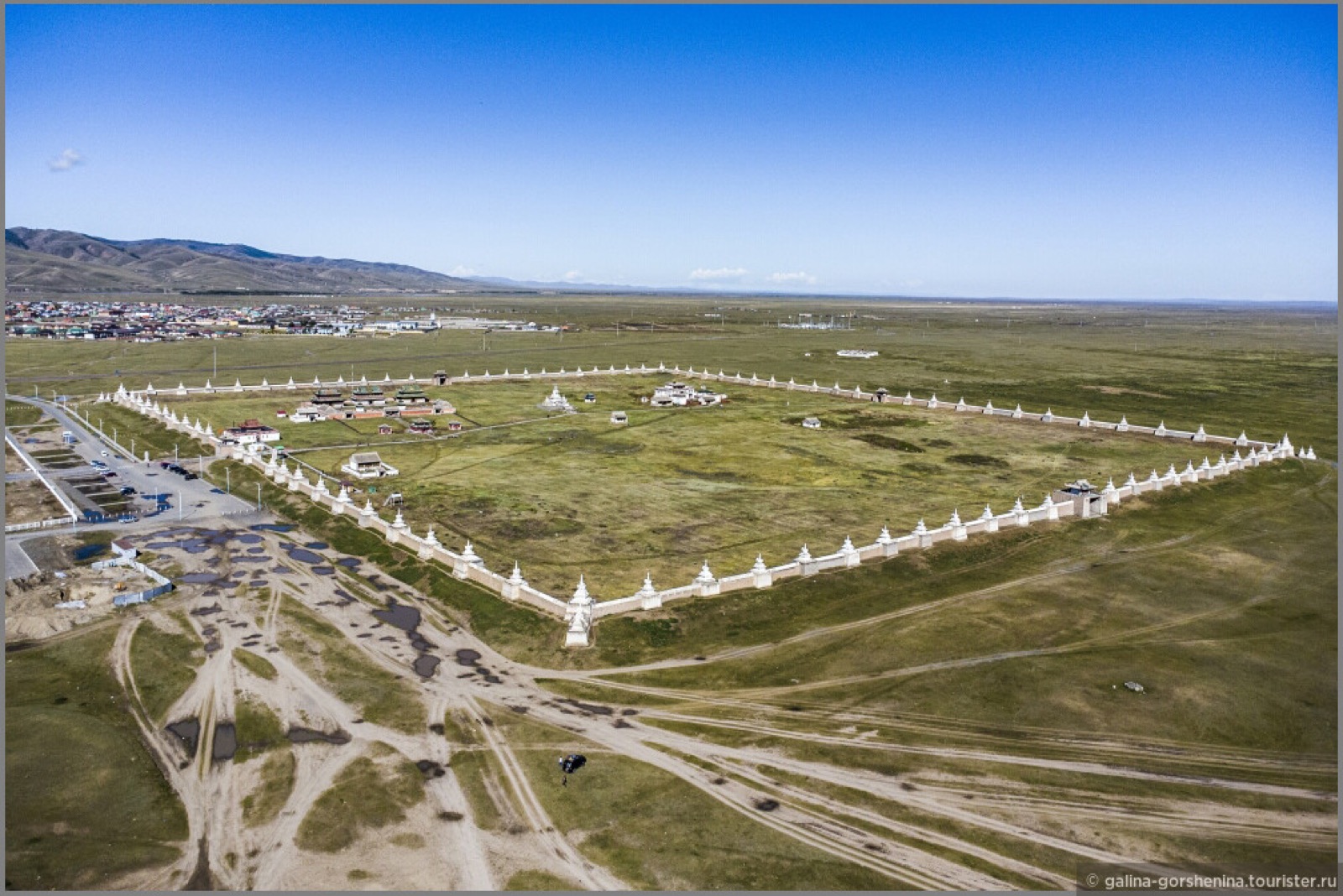
The Yuan dynasty fell in 1368 and the Mongols returned to the steppe, divided among rival princes. In the 16th century Tibetan Buddhism spread rapidly. Erdene Zuu monastery was founded in 1585 beside the ruins of Karakorum. In the 17th century Zanabazar, a descendant of Chinggis Khaan, became the first Bogd Gegeen, the spiritual head of Mongolian Buddhism. He was also a great sculptor, whose bronzes you can see in Ulaanbaatar's museums.
From 1691 the Mongols of what is now Mongolia came under the rule of the Manchu Qing dynasty of China, which lasted more than two centuries.
Independence and socialism
When the Qing collapsed in 1911, Mongolia declared independence under the eighth Bogd Gegeen, the Bogd Khaan. Years of turmoil followed. In 1921, Mongolian revolutionaries backed by Soviet Russia took power, and in 1924 the Mongolian People's Republic was declared, the world's second communist state.
The socialist period brought schools, hospitals, literacy and the Cyrillic alphabet. It also brought terror. In the purges of the late 1930s, tens of thousands of people were killed, among them most of the country's senior lamas, and nearly all of its roughly 700 monasteries were destroyed. The ruins you see at Ongi, Manzushir and elsewhere date from these years.
Democracy
In the winter of 1989 to 1990, peaceful demonstrations in Ulaanbaatar led the government to resign. Mongolia held its first free elections in 1990 and adopted a democratic constitution in 1992. Buddhism revived, monasteries reopened, and Chinggis Khaan returned to public life as a national symbol.
Mongolia today
Mongolia is a democracy of about 3.5 million people between Russia and China, with one of the lowest population densities on earth. About half the population lives in Ulaanbaatar. Mining of copper, coal and gold drives the economy. Around a quarter to a third of Mongolians are still herders, and the country has about 20 times more livestock than people.
The nomadic way of life you will see on your trip is real and continuing, and it is also under pressure from harsh winters, overgrazing and the pull of the city. Travellers who stay with herding families, and pay them fairly, are a small part of what helps it last.